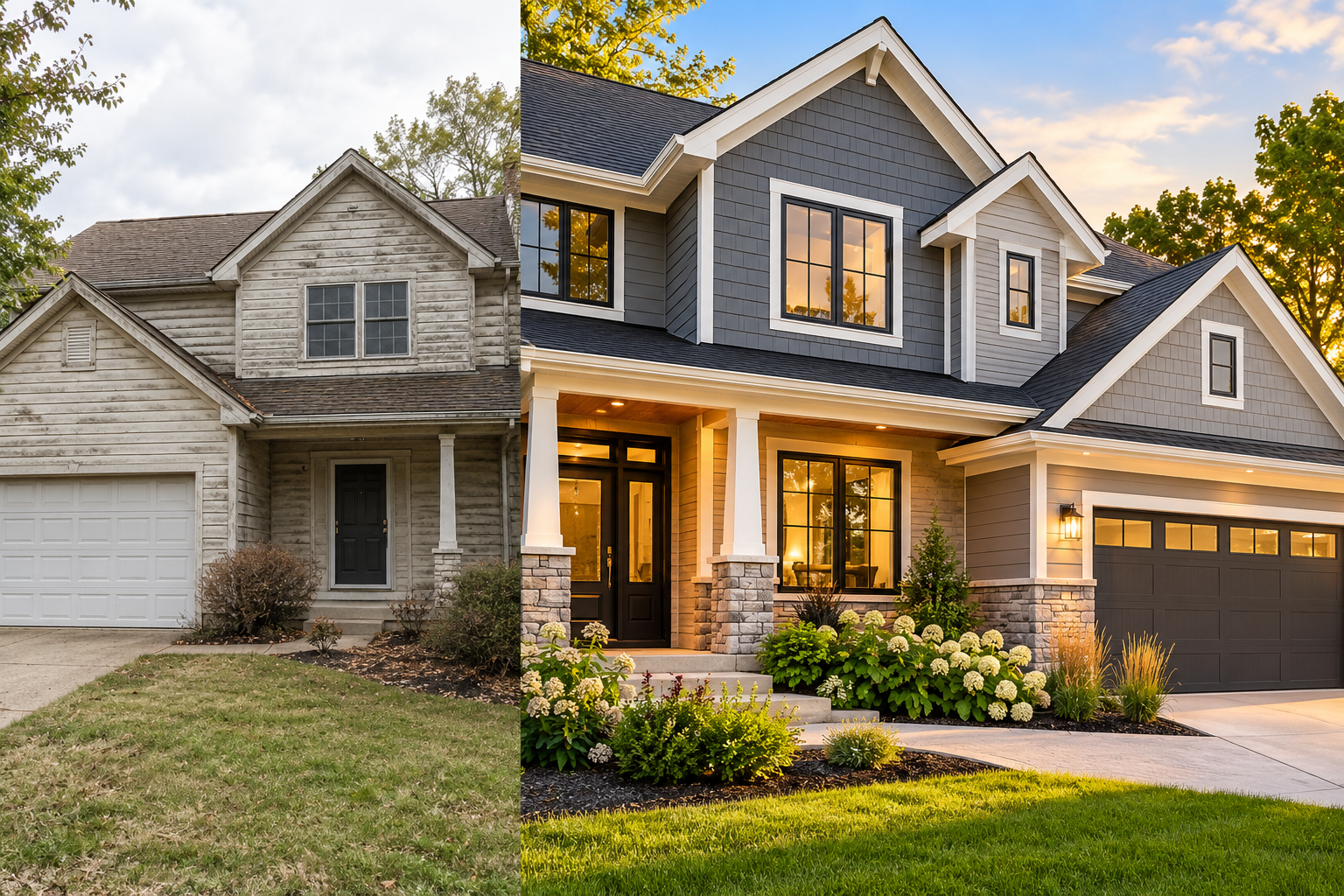
Wondering, is an exterior renovation worth the investment? This guide covers ROI, curb appeal, and long-term value to help you decide. Contact us today!
Can New Siding Lower Energy Bills?
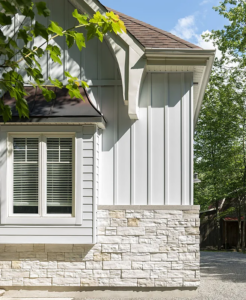 For homeowners looking for tangible ways to reduce monthly expenses, the answer to the question, “Can new siding lower energy bills?” is a resounding yes. While new siding dramatically improves curb appeal, its most significant long-term value often lies in its ability to enhance your home’s thermal performance. Consequently, this upgrade reduces the strain on your heating and cooling systems, leading to noticeable savings over time. Importantly, the effectiveness of this investment depends on the type of siding chosen, the quality of the installation, and your home’s existing condition.
How Siding Impacts Your Home’s Energy Efficiency
To understand how siding affects energy use, you must first think of your home as having a thermal envelope. This envelope is the boundary between the conditioned indoor space and the unconditioned outdoor environment. Furthermore, any weakness in this barrier, such as poorly insulated walls, allows for heat transfer, forcing your HVAC system to work harder. Siding is a critical component of this protective layer.
Specifically, its primary role in energy efficiency is to provide an additional layer of insulation and act as an air barrier. The insulating capacity of a material is measured by its R-value; a higher R-value indicates better thermal resistance. Therefore, when you install new siding, especially an insulated variety, you are effectively increasing the total R-value of your exterior walls. As a result, your home stays warmer in the winter and cooler in the summer with less effort from your furnace and air conditioner.
What Are the Best Siding Materials for Energy Savings?
The material you choose plays a pivotal role in the potential energy savings. While nearly any new siding will offer some improvement over old, warped, or damaged materials, certain types are engineered for superior thermal performance. For example, insulated vinyl and composite sidings are excellent choices for homeowners prioritizing energy efficiency.
- Insulated Vinyl Siding: This popular option features a layer of rigid foam insulation fused to the back of each panel. This design significantly boosts the R-value of your walls, reducing thermal bridging where heat escapes through wall studs. Additionally, it creates a snug, energy-efficient barrier.
- Fiber Cement Siding: While not inherently as insulating as foam-backed vinyl, fiber cement is incredibly dense and durable. Its stability means it holds a tight seal for decades, preventing air and moisture infiltration that can compromise your home’s efficiency. When paired with a quality house wrap and wall insulation, it contributes to a robust thermal envelope, a process you can visualize with siding replacement photo rendering.
- Composite Siding: Engineered products, often made from a blend of wood fibers, resins, and polymers, can offer excellent insulation. These materials are designed to be low-maintenance and highly resistant to temperature fluctuations, ensuring consistent performance.
The Financial Case: Answering “Can New Siding Lower Energy Bills?”
The return on investment from new siding comes from both increased property value and direct energy savings. While the exact amount saved varies based on climate, home size, and utility rates, studies consistently show a noticeable reduction in heating and cooling costs. According to the U.S. Department of Energy, proper insulation is one of the most effective ways to improve a home’s energy efficiency.
Moreover, by choosing an insulated siding product, you could see savings of 10% to 20% or more on your annual energy bills. Over the lifespan of the siding, these savings can add up to a substantial sum, effectively helping the project pay for itself. Ultimately, the financial return confirms that the answer to “Can new siding lower energy bills?” is positive, especially when viewed as a long-term investment in your home’s performance and comfort.
Beyond the Material: The Role of House Wrap and Installation
A crucial point to remember is that the siding material itself is only one part of the equation. For maximum energy efficiency, the siding must be part of a complete wall system. This includes a high-quality weather-resistive barrier, often called a house wrap, installed underneath the siding. This wrap serves as a secondary defense against air and water infiltration, which are major sources of energy loss.
Furthermore, professional installation is non-negotiable. Improperly installed siding can have gaps, unsealed seams, and other defects that create drafts and allow energy to escape. A skilled installer ensures every component is correctly fitted and sealed. This is precisely why every siding project should start with a detailed design plan to ensure all elements are accounted for before work begins.
How Can You Maximize Savings from a Siding Upgrade?
Simply installing new siding is a great start, but a strategic approach will yield the best results. To truly maximize your energy savings, consider the entire exterior of your home. For instance, are your windows old and drafty? Is your attic insulation sufficient? Combining a siding project with other energy-focused upgrades can create a synergistic effect, leading to even greater reductions in your utility bills.
In addition, selecting the right color can have a minor but measurable impact. Lighter-colored siding reflects more sunlight, which can help keep your home cooler in hot, sunny climates, reducing the load on your air conditioner. Working with an exterior design professional ensures all these elements work together harmoniously for both aesthetic appeal and peak performance.
Final Thoughts: A Clear Path to Lower Bills
Investing in new siding is one of the most impactful upgrades a homeowner can make. It offers a dual benefit of transforming your home’s appearance while delivering significant, long-term energy savings. The key is to make informed choices about materials and ensure the entire system is installed correctly for a tight, efficient thermal envelope.
- Key Takeaway 1: New siding, especially insulated varieties, increases your walls’ R-value, directly reducing heat transfer.
- Key Takeaway 2: The material choice, a proper house wrap, and professional installation are all critical for maximizing energy efficiency.
- Key Takeaway 3: The financial benefits are clear, with potential annual energy savings helping to offset the initial investment over time.
In conclusion, the evidence is clear. If you’ve been asking yourself, “Can new siding lower energy bills?”, you now have a comprehensive answer. It’s a strategic home improvement that pays you back through reduced energy consumption, increased comfort, and enhanced property value. Therefore, when it’s time to replace your home’s exterior, consider it an opportunity not just for a cosmetic update, but for a smart financial and environmental investment.
Related Posts